Flex Body Dynamics
a flexible part inside a multibody model
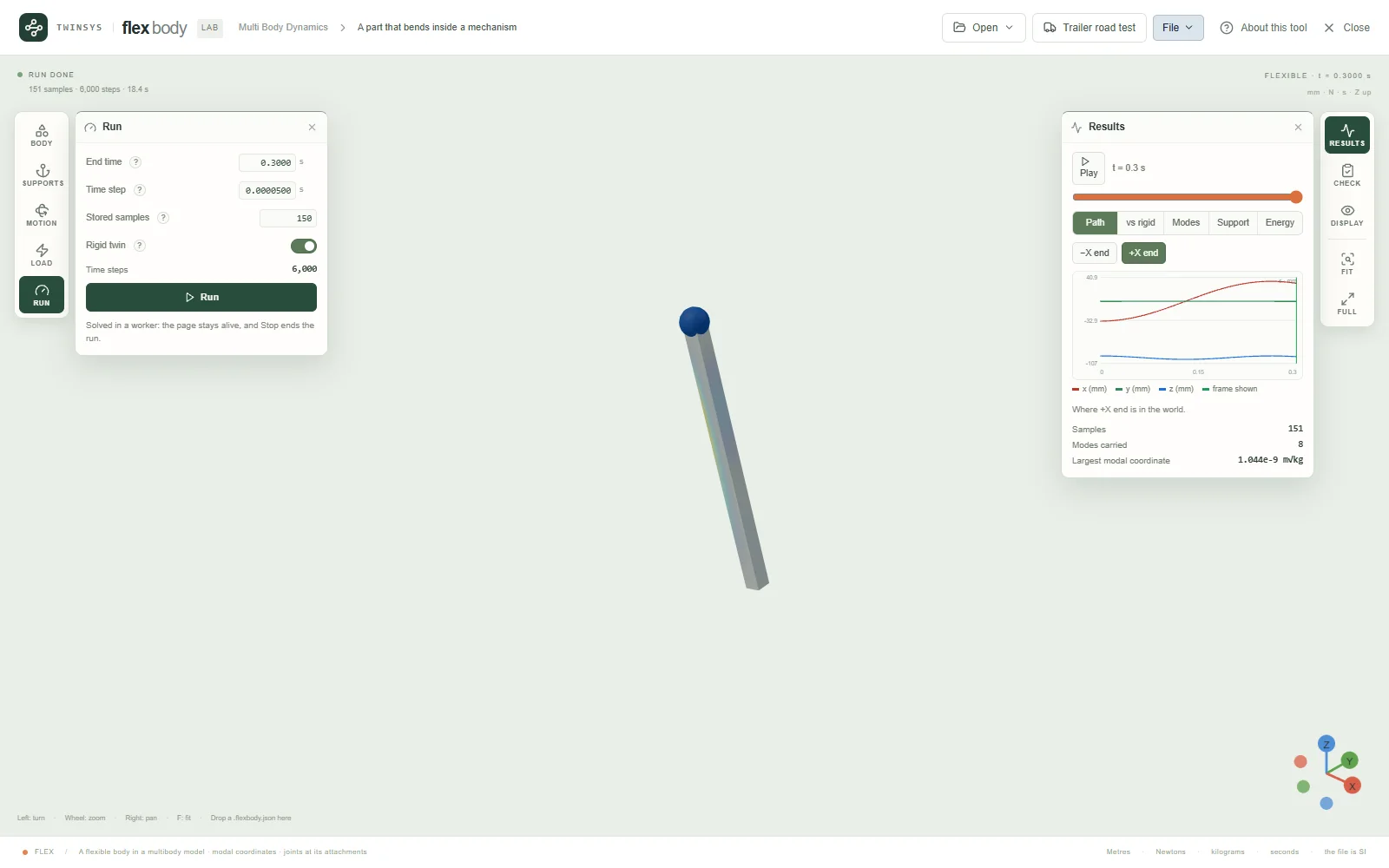
A flexible part held, driven and loaded in a multibody model, run next to its rigid twin, with stress and displacement drawn on the part.
Product pages are in English.
Highlights
- Open a flex body file made in Mode SuperPosition, or make the built-in steel bar
- Hold the part at its attachments with a hinge, a ball or a fixed support; drive it and load it
- The rigid twin runs beside it, so the flexibility shows
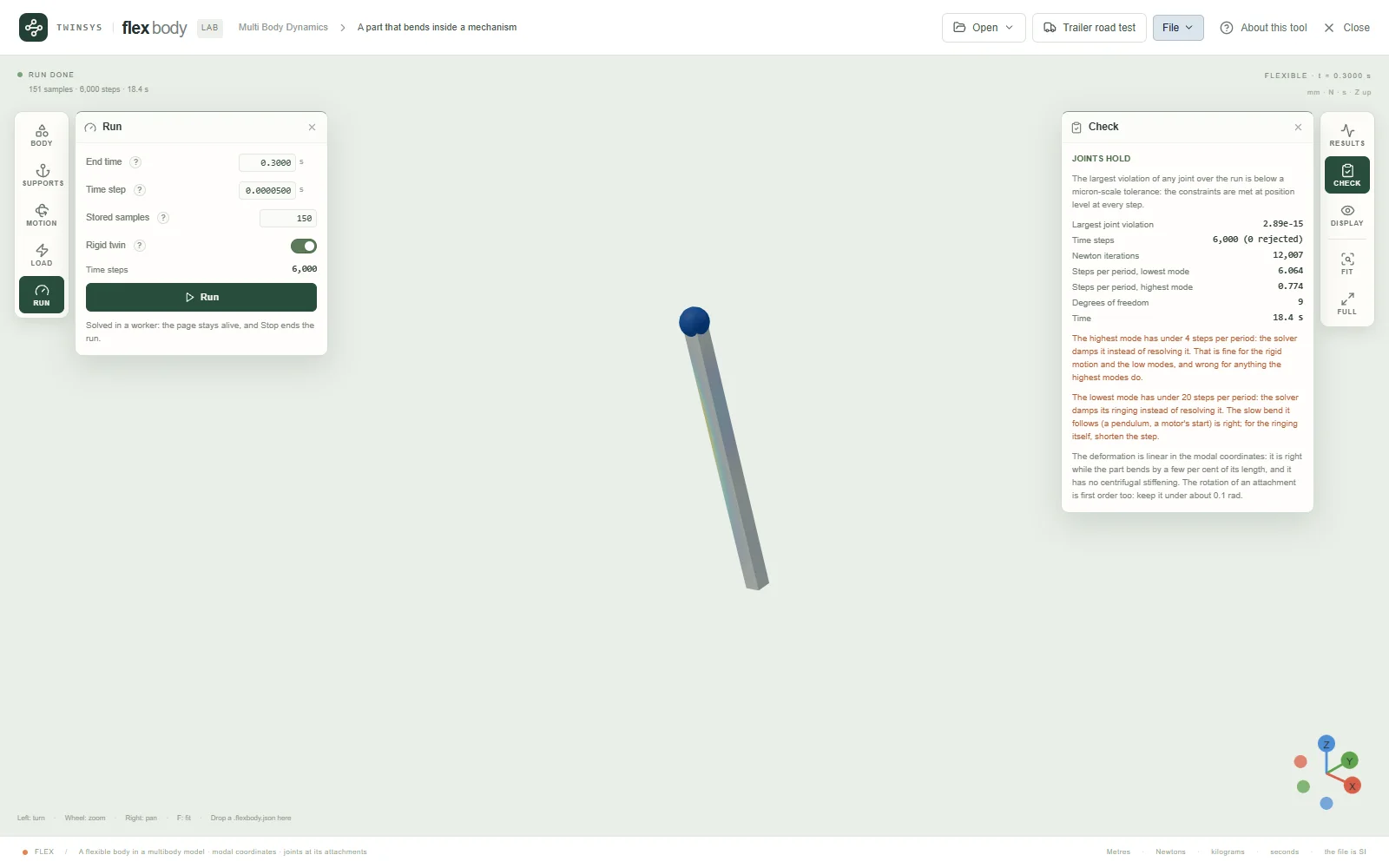
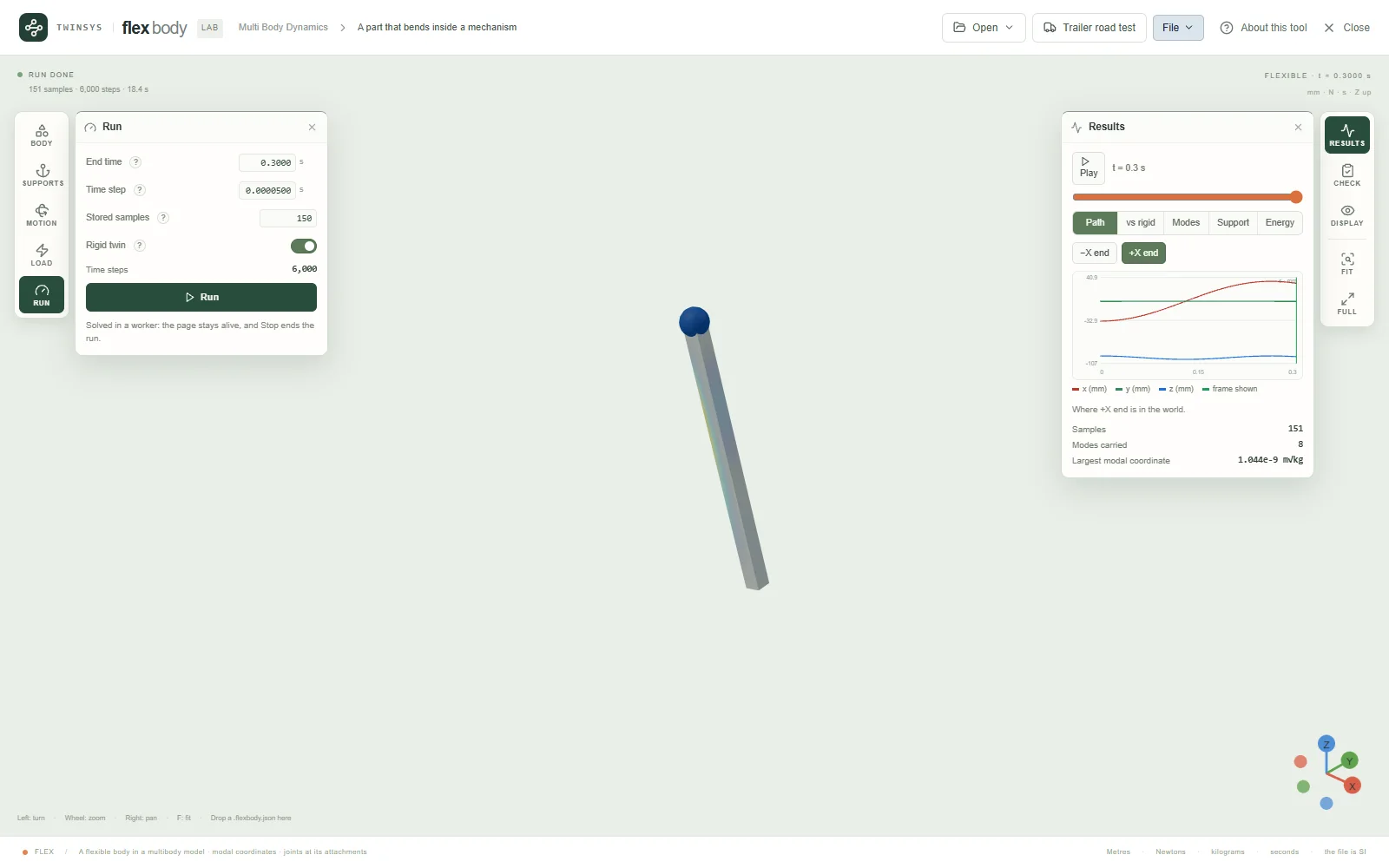
- A Check says whether the joints hold, the energy is kept and the time grid is fine enough
- Hand a frame on to the Trailer Road Test with one button
Inside the tool
Click a picture to enlarge it. Every picture is a screenshot of the running app.
A question it answers
How much does a swinging steel bar bend compared with the same bar taken as rigid, and where is the stress highest?What you put in
A .flexbody.json file from Mode SuperPosition (or the sample steel bar), supports at its attachments, a motion and a load with a time profile.
What you get
The flexible and rigid results side by side, with displacement and stress drawn on the part, the joint reactions, and a Check of the joints, the energy and the time grid.
More in this family
 New
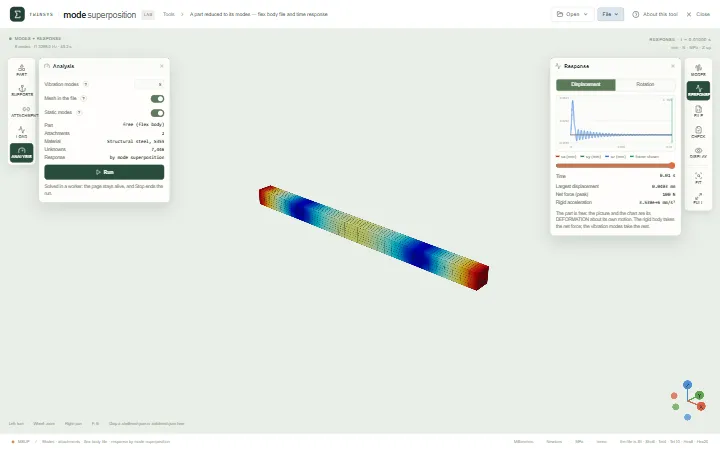
Mode SuperPosition
PremiumReduce a free shell or solid part to its vibration modes: six numbers per attachment, mass properties, a time response and a flex body file.
 New
Trailer Road Test
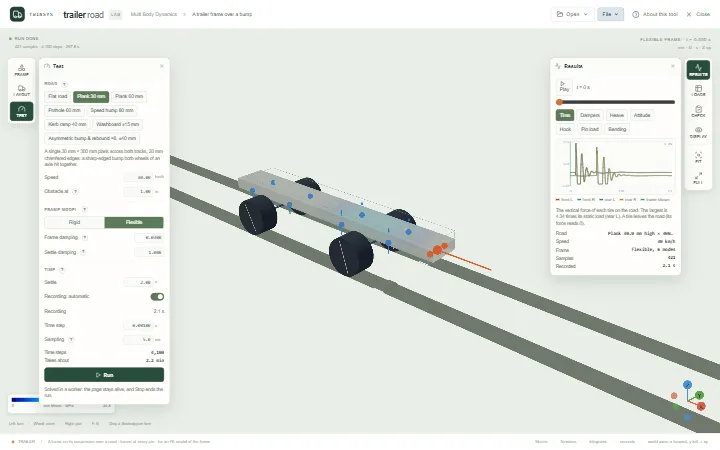
PremiumHang a trailer frame on its pins, pull it over a test road and get the force and moment at every pin as load cases for an FE model.
 New
Simulation Workflow
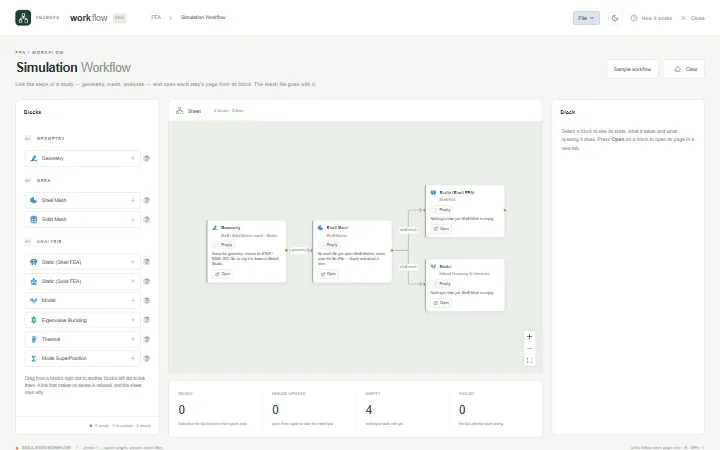
Free accountA project sheet for a study: link geometry, meshers and analyses as blocks, see what needs updating and open each step.
Mesh & INP & DAT
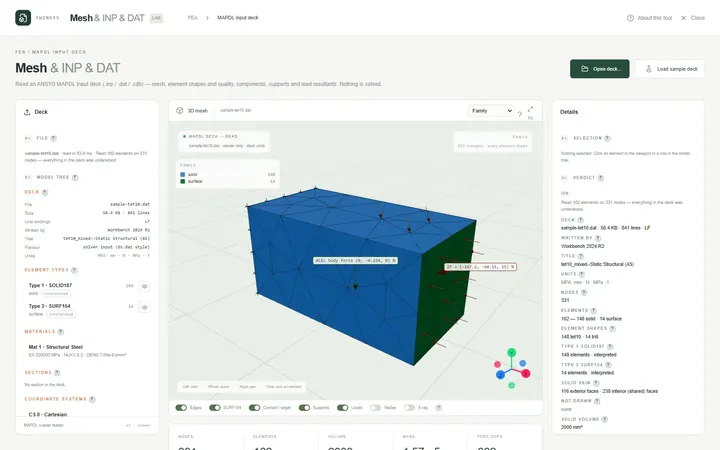
PremiumOpen ANSYS MAPDL input decks (.inp, .dat, .cdb) in the browser — mesh, supports, loads, DOFs — and solve them in Twinsys.
Shell Mesher
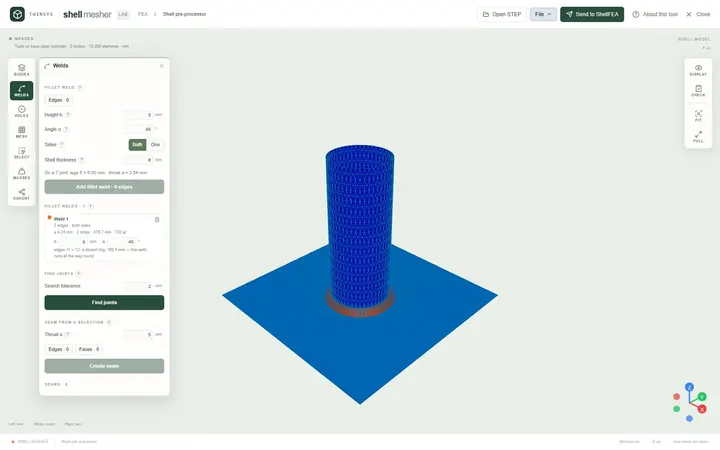
Free accountMesh STEP sheet bodies for shell analysis in the browser: thickness and element size per body, bolts in holes, fillet welds, one mesh file.
 New
Solid Mesher
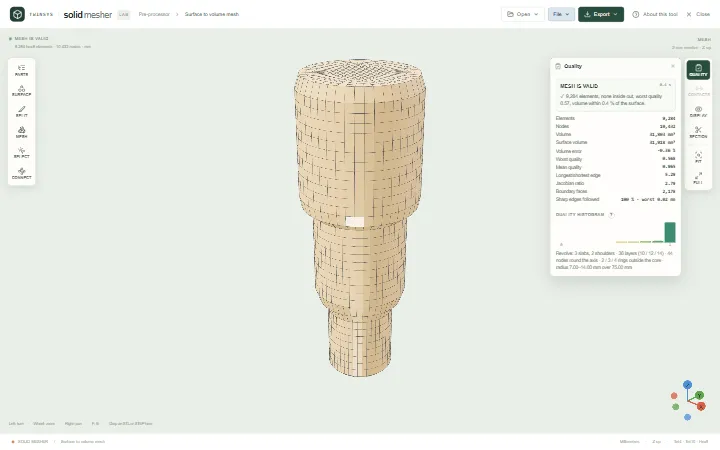
Free accountTurn a closed STL or STEP surface into a Tet4, Tet10 or Hex8 volume mesh, with structured meshers for shafts, sheets and cylinders.