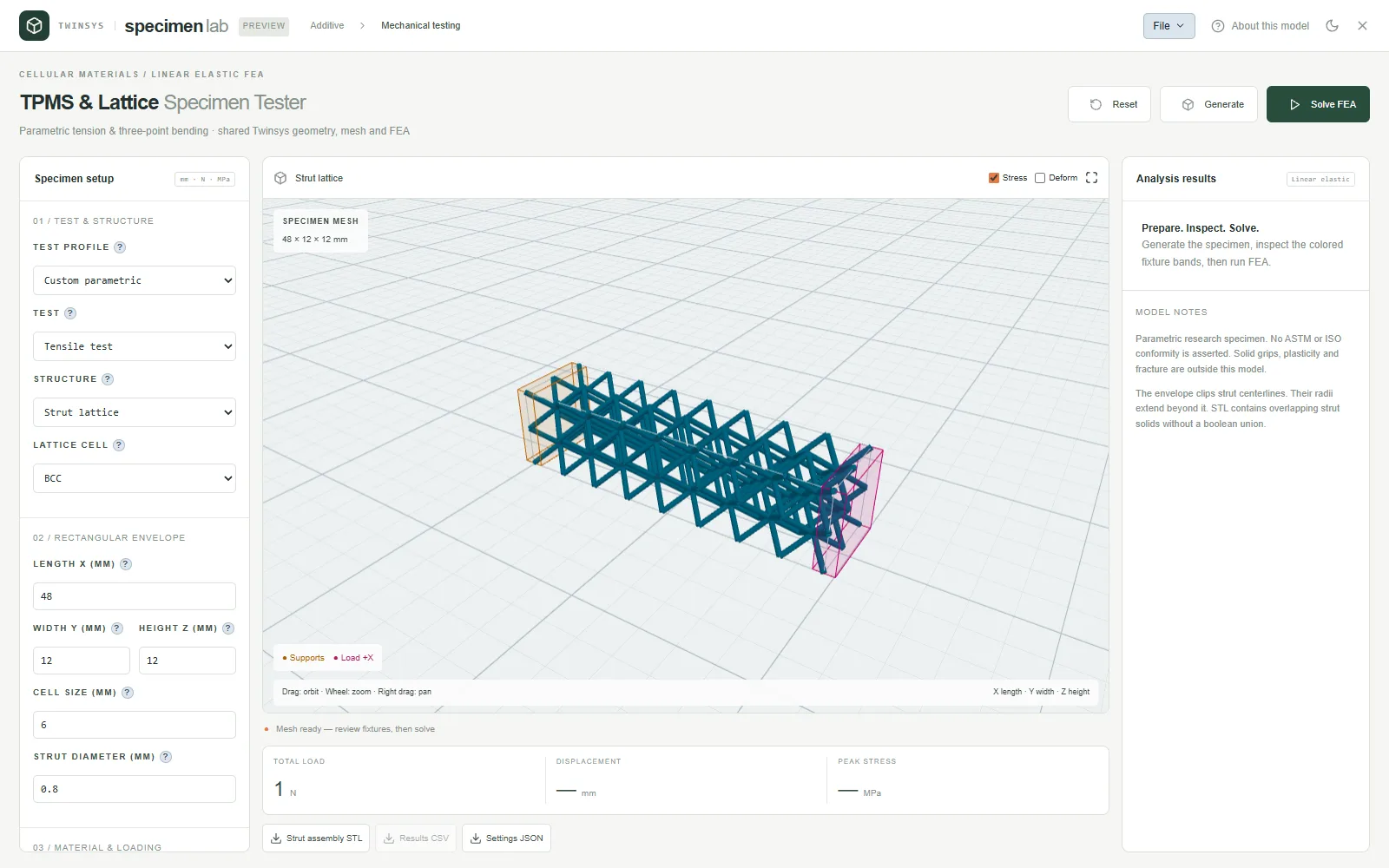
TPMS & Lattice Specimen Tester
Build TPMS or strut-lattice tensile and three-point-bending specimens and solve them with linear FEA for apparent stiffness and modulus.
Product pages are in English.
Highlights
- TPMS shell or strut lattice with your cell size and wall or strut dimensions
- Custom sizes or ISO 1926, 1209-2, 6892-1 and 7438 reference profiles (not a conformity check)
- Displacement and stress contours, apparent stiffness and modulus, and a virtual gauge
- Material constants from the Twinsys library or typed in
- CSV results, settings JSON and geometry STL; save inputs on your computer or in your cloud
A question it answers
How does cell size or wall thickness change the apparent elastic stiffness of a tensile or bending specimen?What you put in
TPMS or strut lattice, custom dimensions or polymer/metal ISO reference profiles, cell size, shell thickness or strut diameter, mesh settings, force, Young modulus, Poisson ratio and yield warning threshold. Units: mm, N, MPa.
What you get
Geometry and fixture preview, displacement/stress contours, apparent stiffness/modulus, nominal stress/strain, true residual, virtual tensile gauge measurement, CSV results, settings JSON and analysis-geometry STL.
More in this family
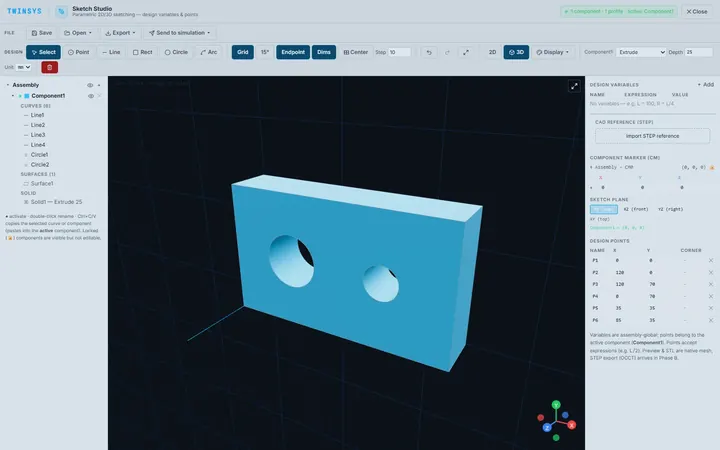
Sketch Studio
PremiumParametric 2D sketching with design variables, extrude and revolve to simple 3D parts, and STEP or STL export, in the browser.
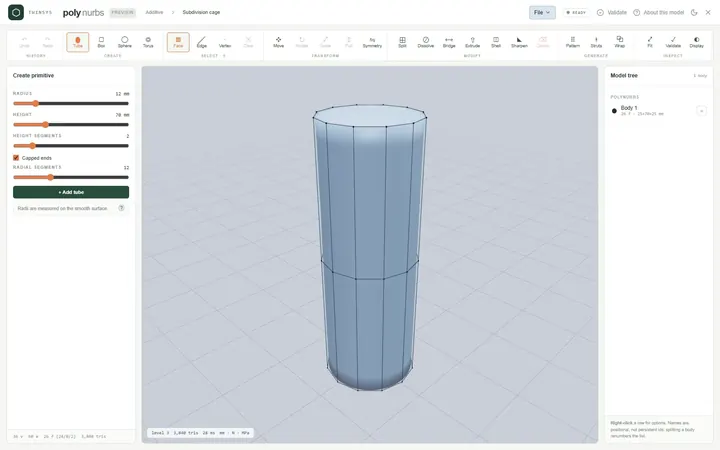
PolyNURBS
PremiumModel smooth organic parts from a quad control cage with subdivision surfaces, or wrap a faceted mesh into an editable cage.
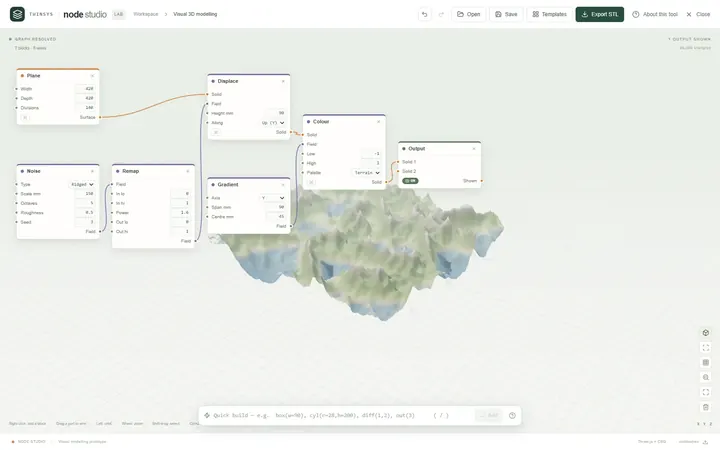
Node Studio
Free accountA visual node-based 3D modeller: wire blocks together and the geometry rebuilds as you type, with lists, fields and booleans.
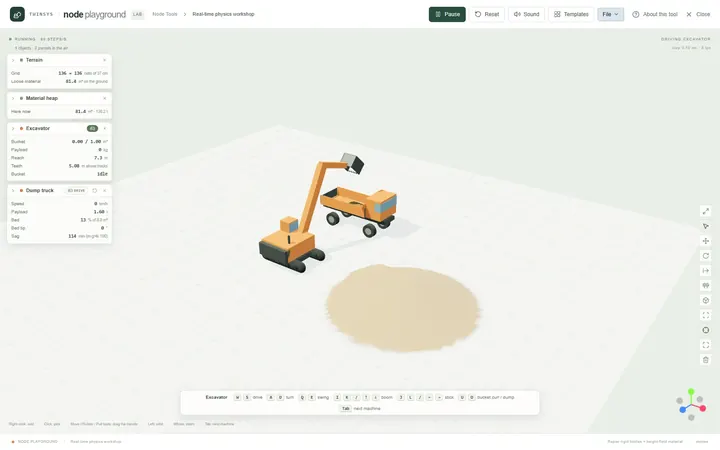
Node Playground
Free accountA real-time physics workshop: drop machines, material, water and structures on the ground and drive them with the keyboard.
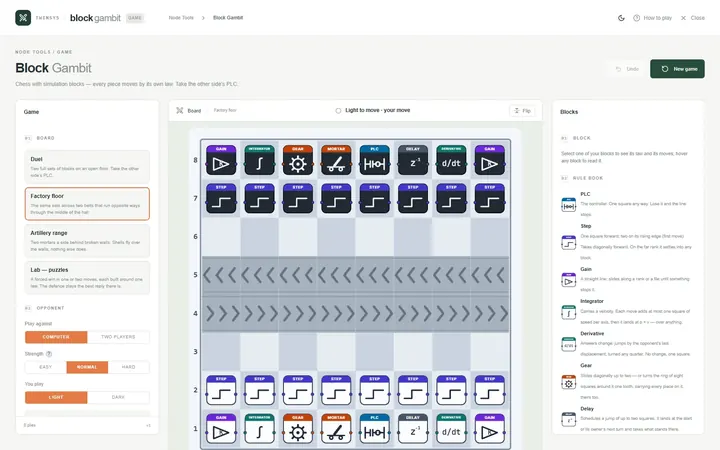
Block Gambit
Free accountChess played with simulation blocks: every piece moves by its own law, and you win by taking the other side’s PLC.
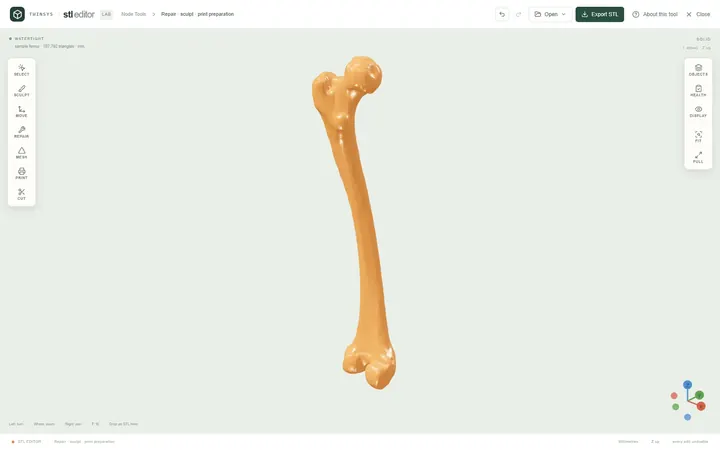
STL Editor
Free accountOpen an STL, see exactly what is wrong with it, repair, edit or sculpt it, and find the orientation that needs least support.